








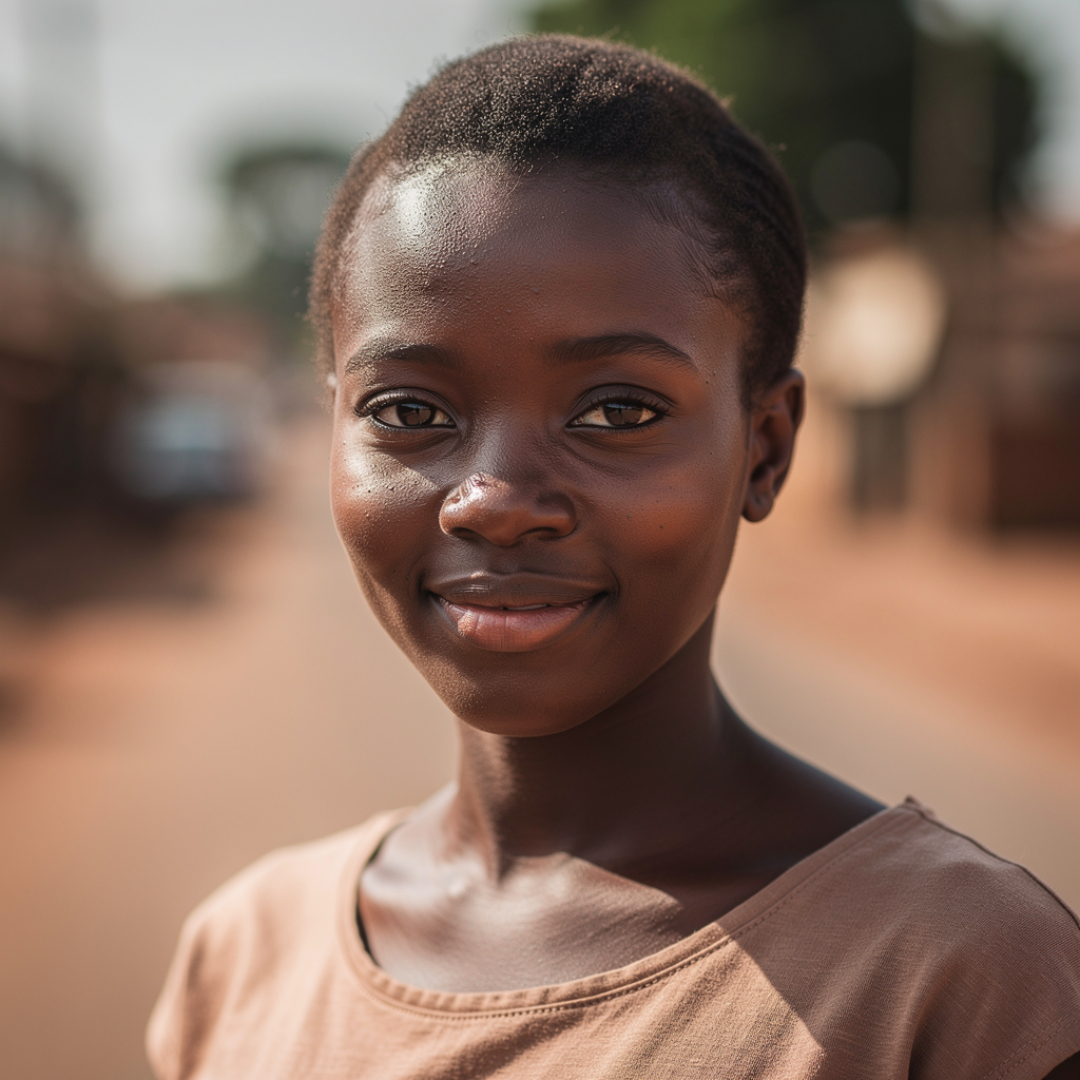
Grace
The Beneficiary
Bio
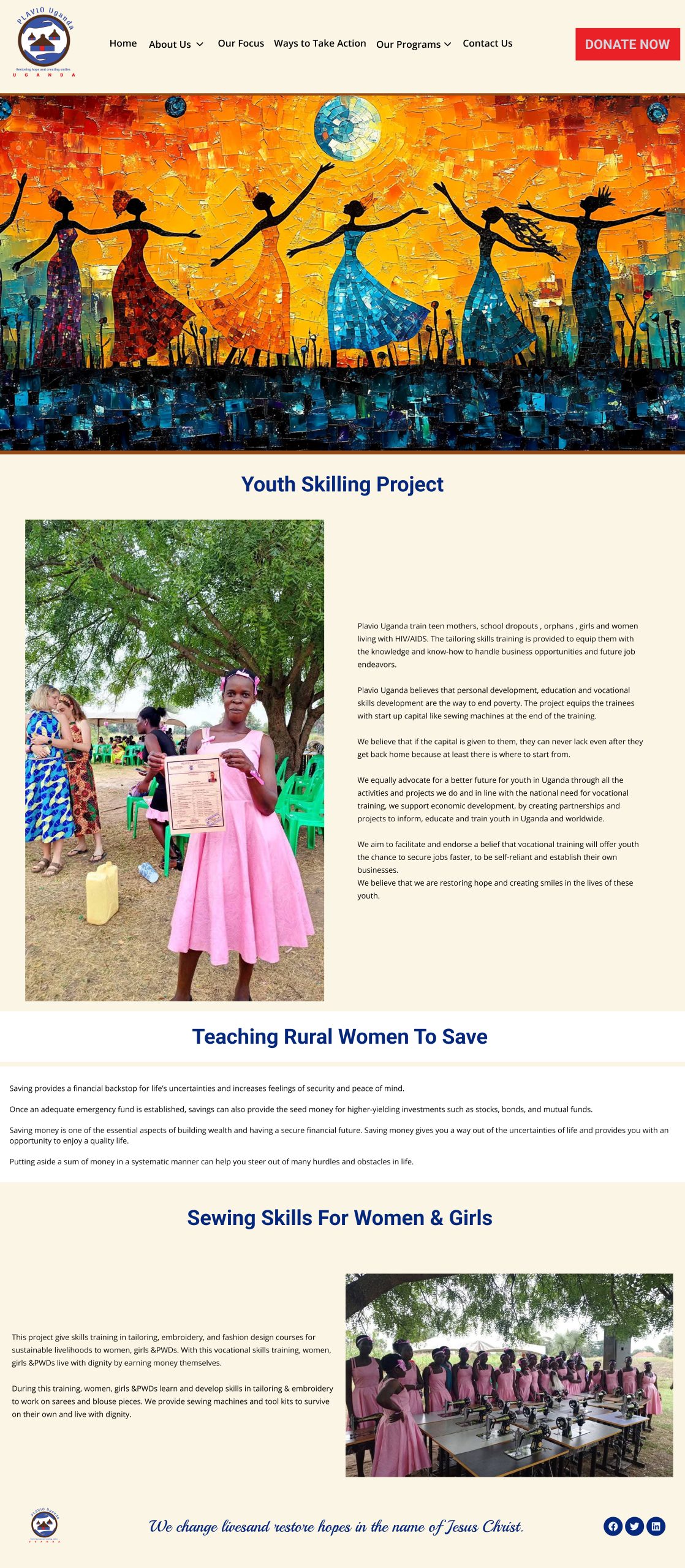
Grace recently completed Plavio's vocational tailoring program after dropping out of secondary school. She lives with her mother and three siblings and sews dresses for neighbors. She uses a shared family phone with limited data and reads most comfortably in Acholi.
Goals
- Find other Plavio programs for her family
- Stay connected to Plavio's community
- Share resources with friends
Pain Points
- Text-heavy English-only content
- Slow loading on poor connections
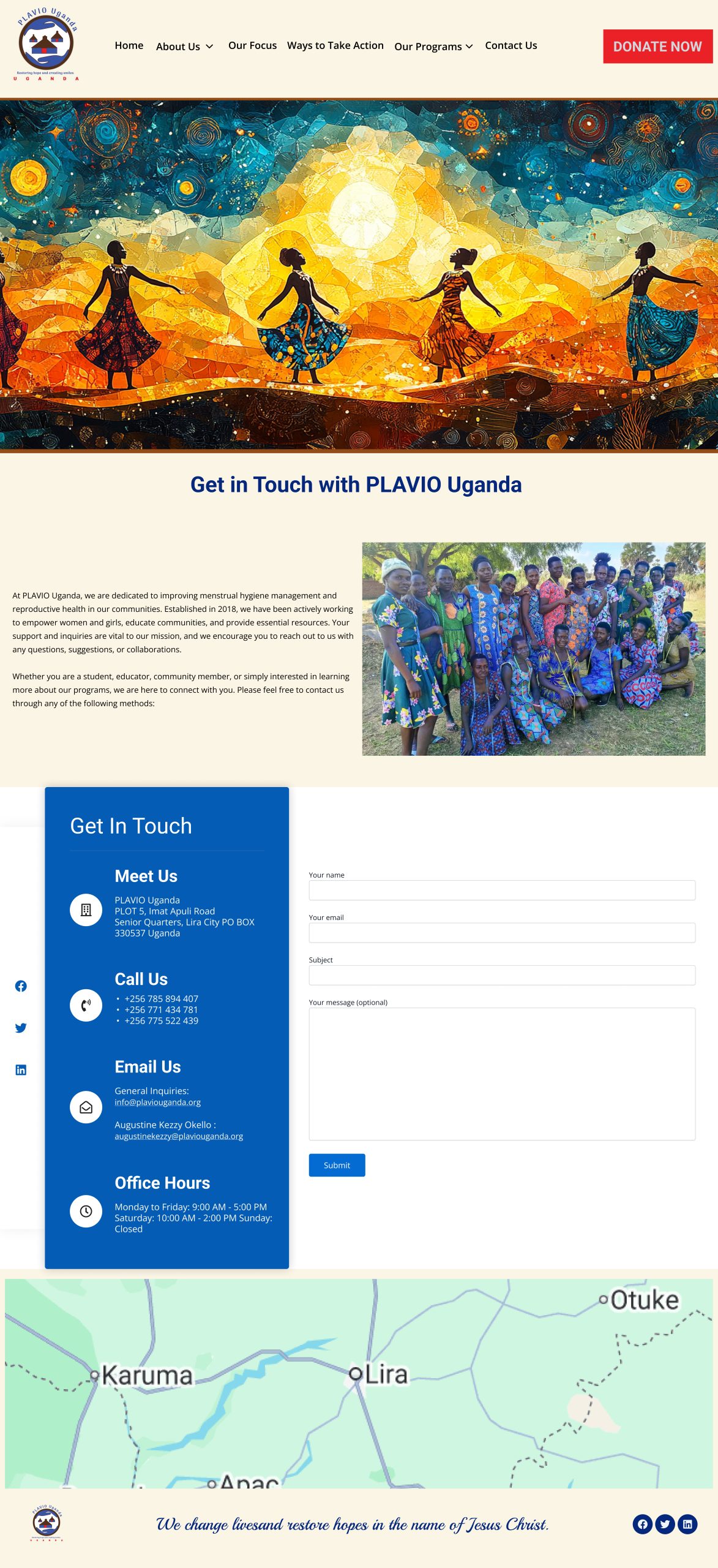
- No clear program-finder for young women
Site Needs
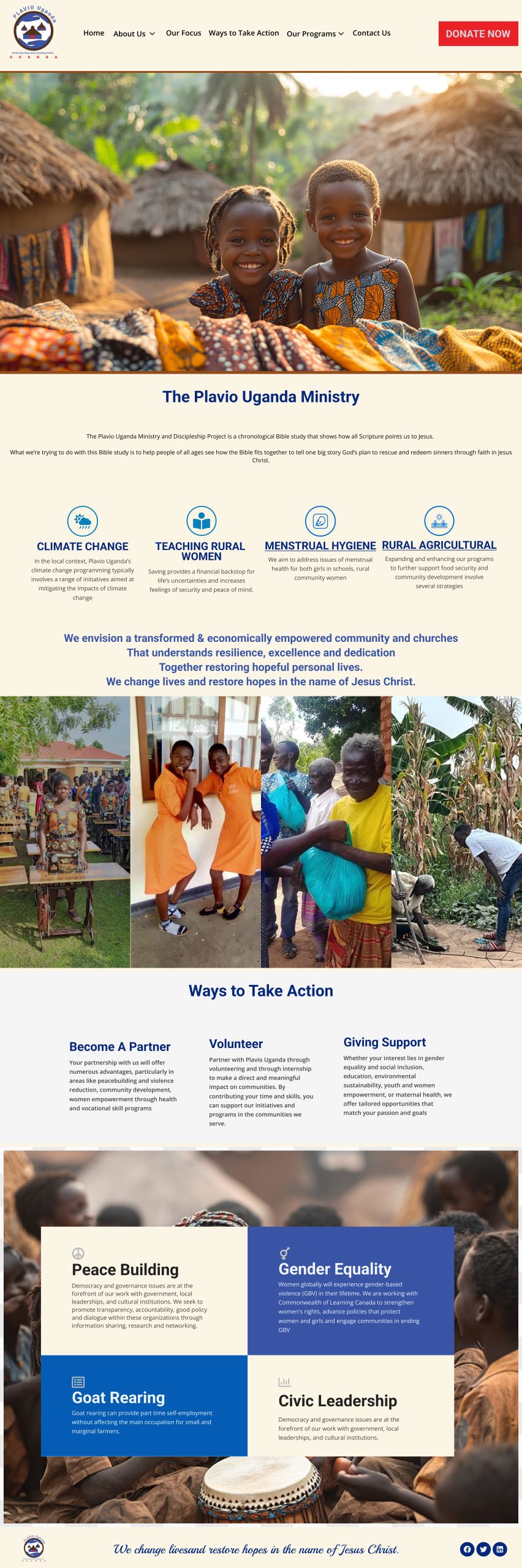
- Visual-first content with icons
- Mobile-first, low-bandwidth performance
- Simple program categories
- Shareable WhatsApp links
I want to know what else Plavio can do for my family — not just what they did for me.
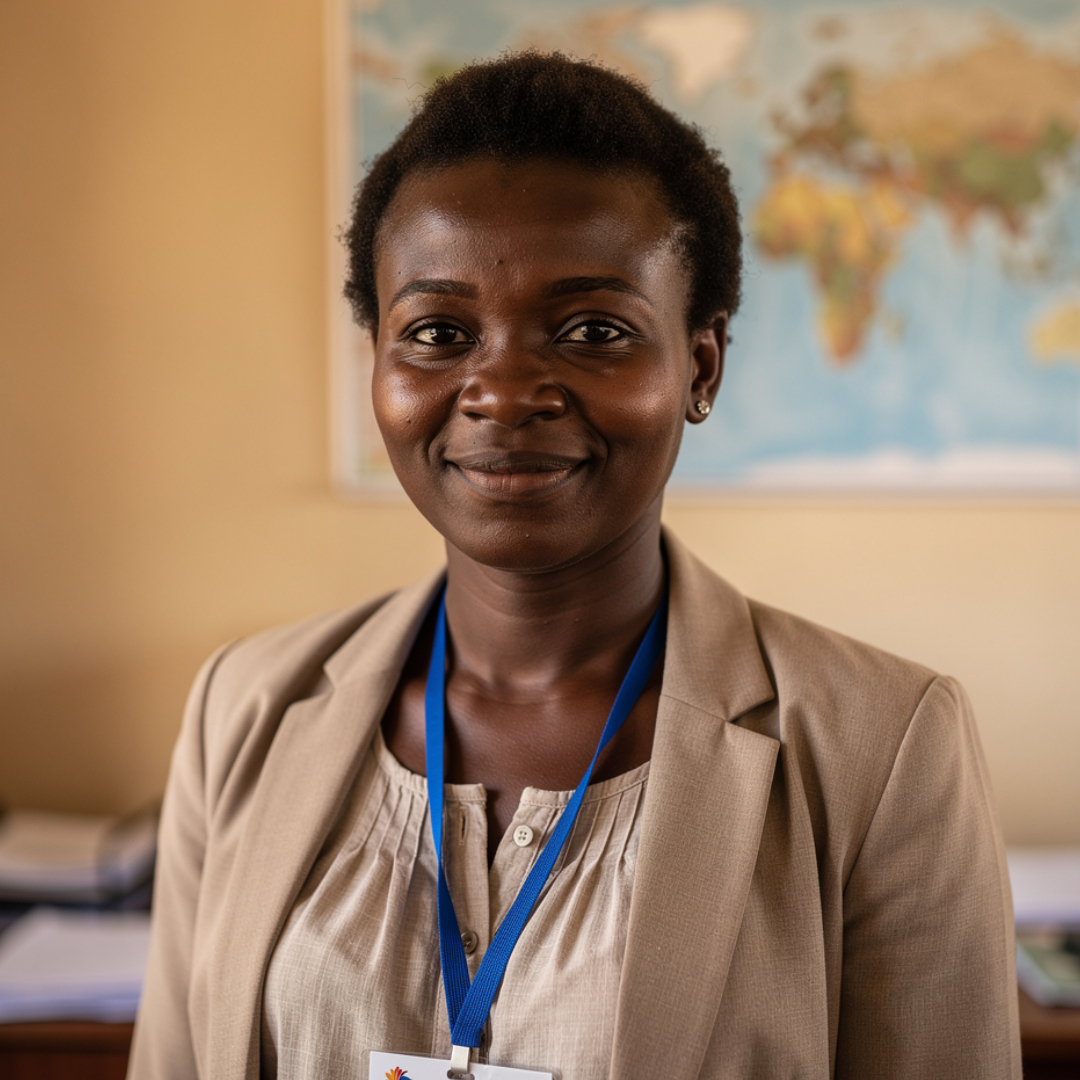
Patrick
The Implementer
Bio
Patrick is a Plavio-trained community leader who runs Bible study groups, vocational workshops, and youth mentoring in his village. He coordinates with Plavio monthly and uses Facebook and WhatsApp daily on a basic smartphone.
Goals
- Direct community members to relevant programs
- Stay current on new Plavio initiatives
- Show Plavio's credibility to elders
Pain Points
- Hard to point people to specific programs
- Information scattered across pages
- No central place for mission and leadership
Site Needs
- Direct-link program pages for WhatsApp
- Clear leadership and faith-foundations section
- News and updates feed
- Print-ready PDFs for offline use
When someone asks me 'what is Plavio?' I need a page I can show them in thirty seconds.
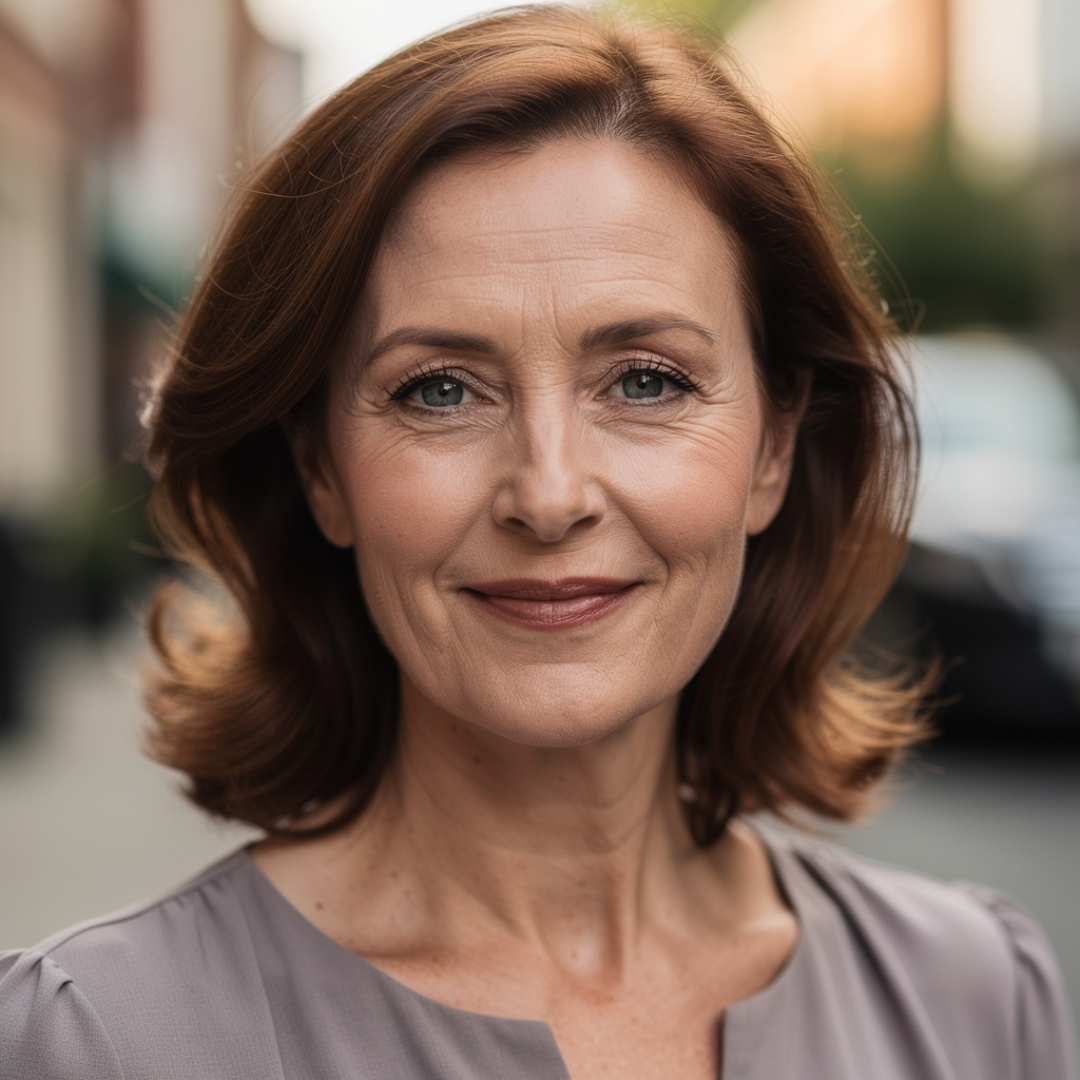
Margaret
The Supporter
Bio
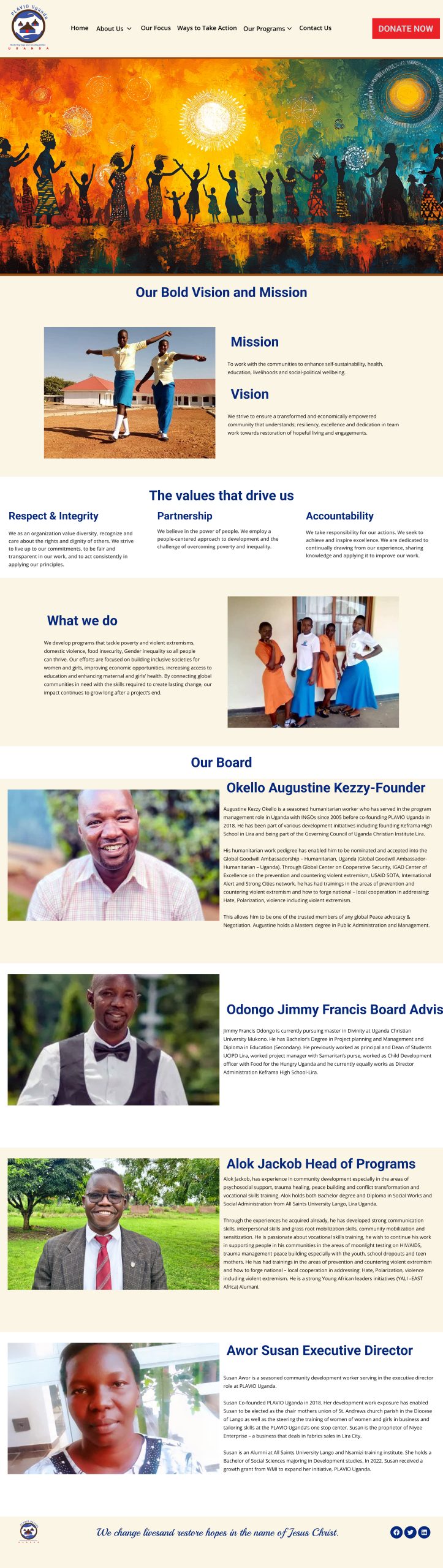
Margaret is a retired teacher and church elder who supports three faith-based NGOs across East Africa. She found Plavio through her church and has donated quarterly for two years. She wants confidence her donations reach real impact.
Goals
- Verify Plavio's transparency and integrity
- See concrete program impact
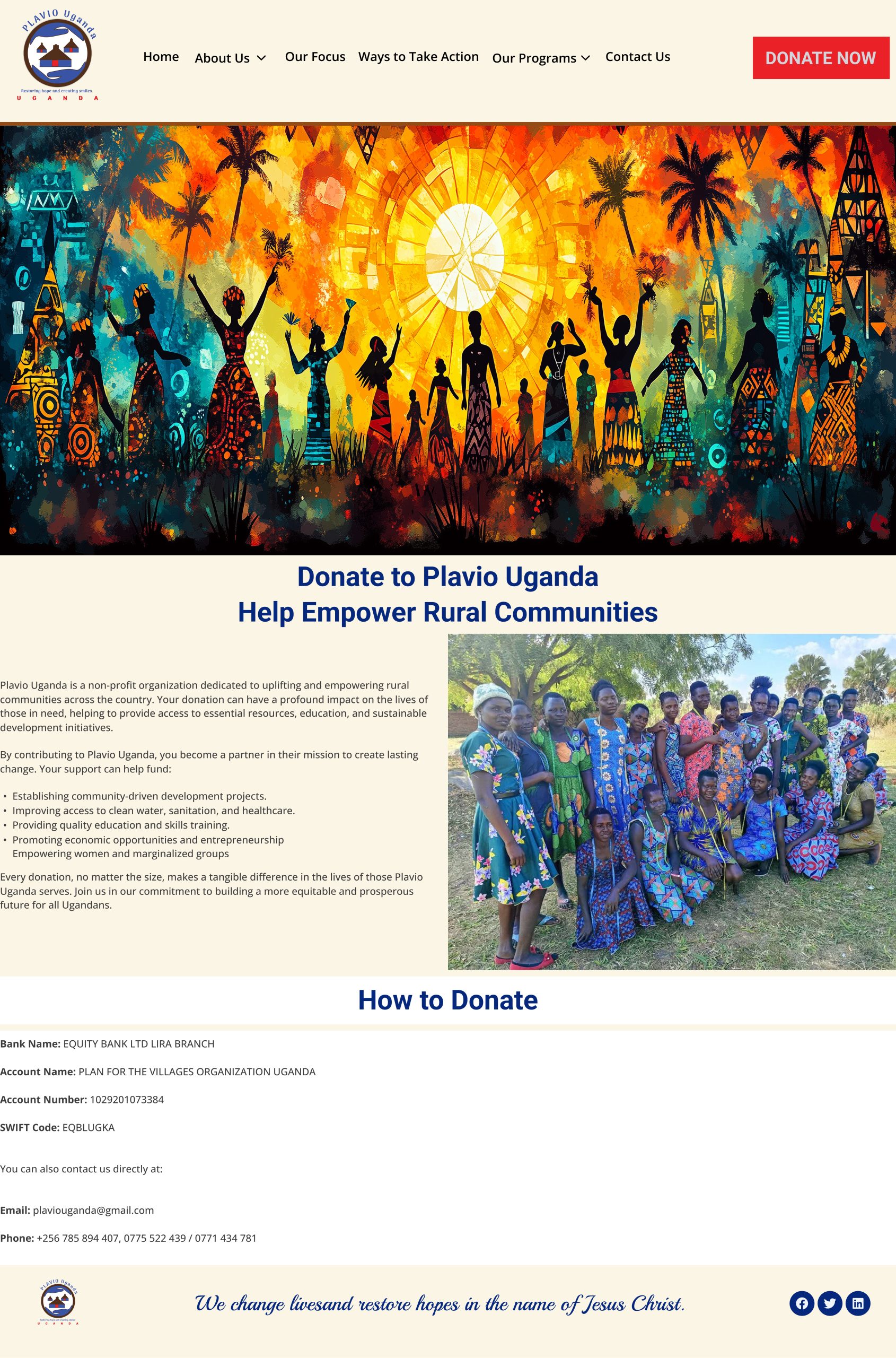
- Donate easily and recurringly
- Share Plavio's work with her church
Pain Points
- No visible impact reporting
- Donation flow buried in old site
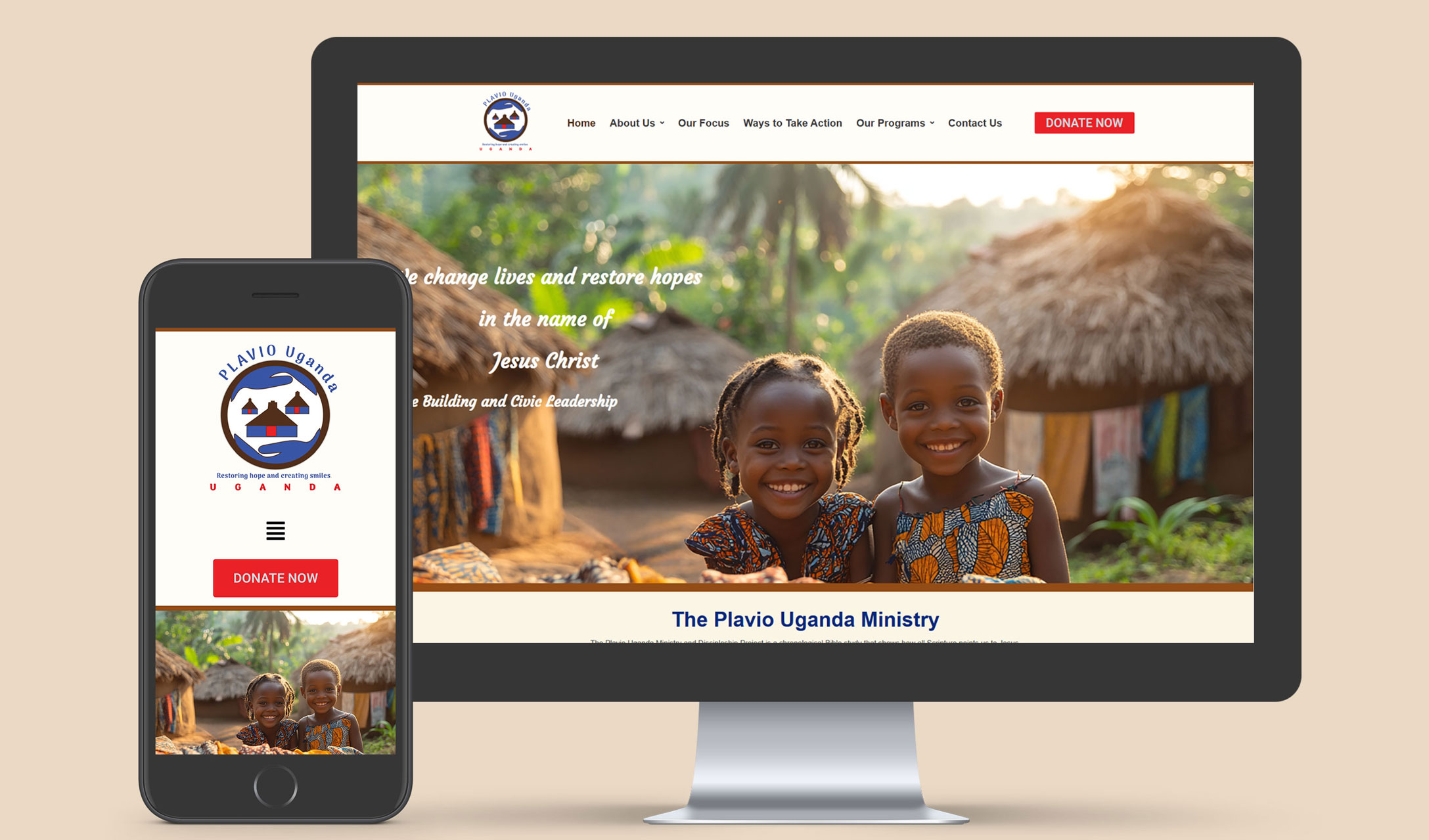
- Few authentic field photos or stories
Site Needs
- Donate button on every page, recurring option
- Impact and stories section
- Transparent leadership and finances
- Clean shareable links
I don't need glossy. I need to know my £40 a month is actually reaching the people on the homepage.
Grace
The Beneficiary
Bio
Grace recently completed Plavio's vocational tailoring program after dropping out of secondary school. She lives with her mother and three siblings and sews dresses for neighbors. She uses a shared family phone with limited data and reads most comfortably in Acholi.
Goals
- Find other Plavio programs for her family
- Stay connected to Plavio's community
- Share resources with friends
Pain Points
- Text-heavy English-only content
- Slow loading on poor connections
- No clear program-finder for young women
Site Needs
- Visual-first content with icons
- Mobile-first, low-bandwidth performance
- Simple program categories
- Shareable WhatsApp links
I want to know what else Plavio can do for my family — not just what they did for me.
Patrick
The Implementer
Bio
Patrick is a Plavio-trained community leader who runs Bible study groups, vocational workshops, and youth mentoring in his village. He coordinates with Plavio monthly and uses Facebook and WhatsApp daily on a basic smartphone.
Goals
- Direct community members to relevant programs
- Stay current on new Plavio initiatives
- Show Plavio's credibility to elders
Pain Points
- Hard to point people to specific programs
- Information scattered across pages
- No central place for mission and leadership
Site Needs
- Direct-link program pages for WhatsApp
- Clear leadership and faith-foundations section
- News and updates feed
- Print-ready PDFs for offline use
When someone asks me 'what is Plavio?' I need a page I can show them in thirty seconds.
Margaret
The Supporter
Bio
Margaret is a retired teacher and church elder who supports three faith-based NGOs across East Africa. She found Plavio through her church and has donated quarterly for two years. She wants confidence her donations reach real impact.
Goals
- Verify Plavio's transparency and integrity
- See concrete program impact
- Donate easily and recurringly
- Share Plavio's work with her church
Pain Points
- No visible impact reporting
- Donation flow buried in old site
- Few authentic field photos or stories
Site Needs
- Donate button on every page, recurring option
- Impact and stories section
- Transparent leadership and finances
- Clean shareable links
I don't need glossy. I need to know my £40 a month is actually reaching the people on the homepage.